

Carcass boards
The carcass is the box behind the door. Near sinks and dishwashers, use moisture-resistant boards and sealed edges. Plywood carcasses are strong and light; moisture-resistant MDF or particle board with good edge banding also perform well when specified correctly.
Door finishes
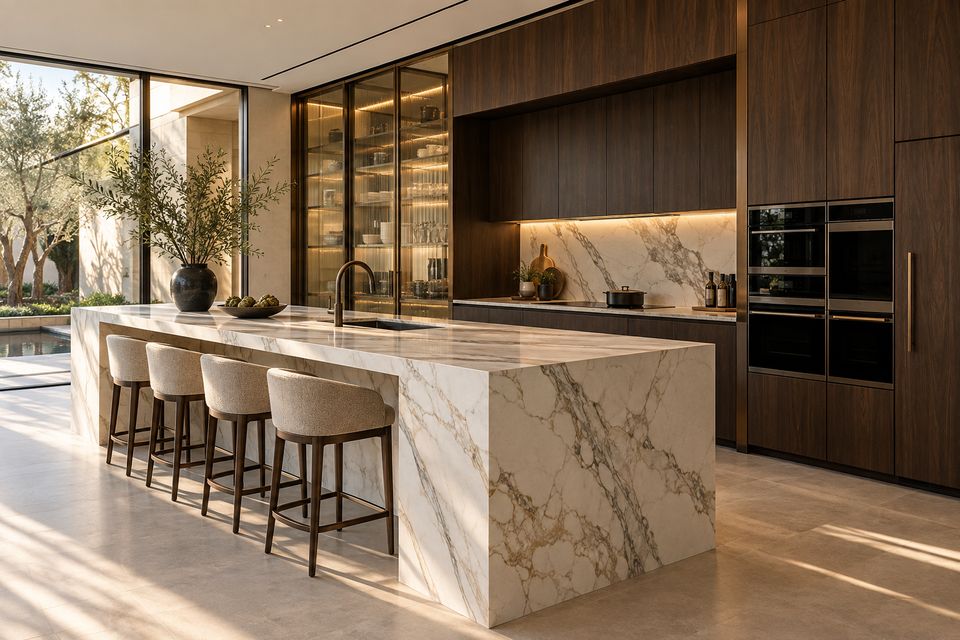
Lacquer gives a seamless matt or gloss colour and can be refinished. Natural wood veneer brings warmth and grain; it should be sealed for kitchen use. High-pressure laminate is durable and cost-effective, with a wide range of colours and woodgrains.
Handleless designs with J-pull profiles or push-to-open keep a quiet, architectural look.
Hardware
Hinges and drawer runners decide how a kitchen feels after years of use. Choose soft-close hinges and full-extension drawer systems from established manufacturers, and plan internal organisers for pans, cutlery and waste.
Worktops
Quartz and sintered stone resist staining, scratching and heat well and are easy to maintain. Natural marble and granite are beautiful but need sealing and more care. Choose the worktop early because it affects cabinet heights, sink and hob details.
Where to spend
Spend on the layout, carcass quality, hardware and the worktop. Door finishes can be balanced against budget: a laminate run of tall units can sit alongside a lacquered or veneered island.
This guide is general information to help you plan. Requirements vary by building, community and authority, so always confirm with your building management or developer before work starts.